Interview
How Integrated Industrial Townships Are Emerging As Blueprint For Next Phase Growth
Shrivallabh Goyal, Whole Time Director and CEO, Reliance MET City, on why the township model is replacing the industrial-park playbook.
A city, not an industrial park
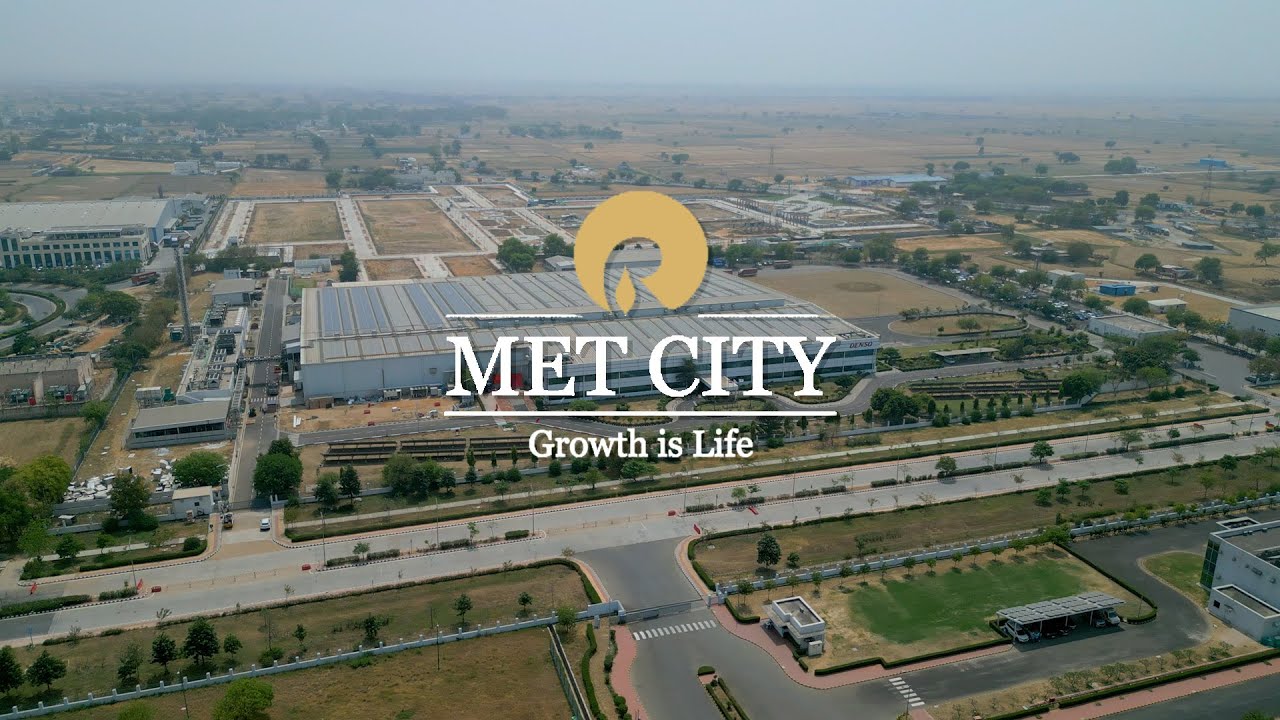
The SEZ model was built as an export enclave. But it was never designed to be a city — infrastructure stopped at the factory gate, and housing, schools and healthcare were left to surrounding towns. MET City was conceived with a fundamentally different premise: build a self-sustaining city. The 220 kV GIS substations, the SCADA-controlled water systems and the walk-to-work design that places residential and commercial zones alongside the industrial all trace back to that founding idea.
Location and plug-and-play infrastructure
MET City sits along the KMP Expressway, within the Delhi-Mumbai Industrial Corridor, with the Haryana Orbital Rail Corridor in the works and a new six-lane Dwarka-Jhajjar link coming up. IGI Airport is roughly an hour away. There is a dedicated 220 kV substation feeding a fully underground smart-grid power network, a 50 MLD treatment plant with end-to-end recycling monitored through SCADA, and NB-IoT enabled street lighting. The township is IGBC Platinum rated and internal roads are built for large container traffic.
“When BEUMER finished its facility here in fifteen months from land identification to inauguration, or when Saab chose MET City for India's first 100% FDI in defence manufacturing, those weren't decisions driven by policy incentives alone.”
Metropolis and the buyer entering today
Metropolis sits on 101 acres at Village Daryapur, on MDR 123. Residential plots range from 112 to 179 square yards, with dedicated industrial and IT/ITES plots and a future group housing component. It is at zero kilometres from Delhi at the Dhansa Border, two minutes from the KMP Expressway, close to AIIMS Badsa and the upcoming BCCI International Cricket Stadium with a 30,000 spectator capacity. It is India's first project to receive LEED Platinum pre-certification under the LEED for Cities: Plan and Design rating system.
Connectivity layers
- KMP Expressway access across the western arc of NCR, from Kundli to Palwal.
- NHAI's upcoming 33-kilometre, six-lane Gurugram–Jhajjar corridor from Garhi Harsaru Bypass at Wazirpur.
- Haryana Orbital Rail Corridor along the KMP from Palwal to Sonipat, targeted for March 2028.
- A Farrukhnagar–Jhajjar rail line in DPR stage.
- Gati Shakti Multi-Modal Cargo Terminal at Farrukhnagar plugging into the Western Dedicated Freight Corridor.
Japan Industrial Township and the road to 2030
MET City is home to prominent Japanese names including Panasonic, Denso and Nihon Kohden, and now hosts companies from twelve countries. Around 40,000 people are directly employed within the ecosystem, with an estimated two to three times that number engaged through indirect employment, and roughly 100,000 families connected to the project in some form. That number is projected to grow three to four times over the next decade.
Originally published by BW Disrupt / BusinessWorld (BW Online Bureau, May 06, 2026). Reproduced here for reference. Read the original article →